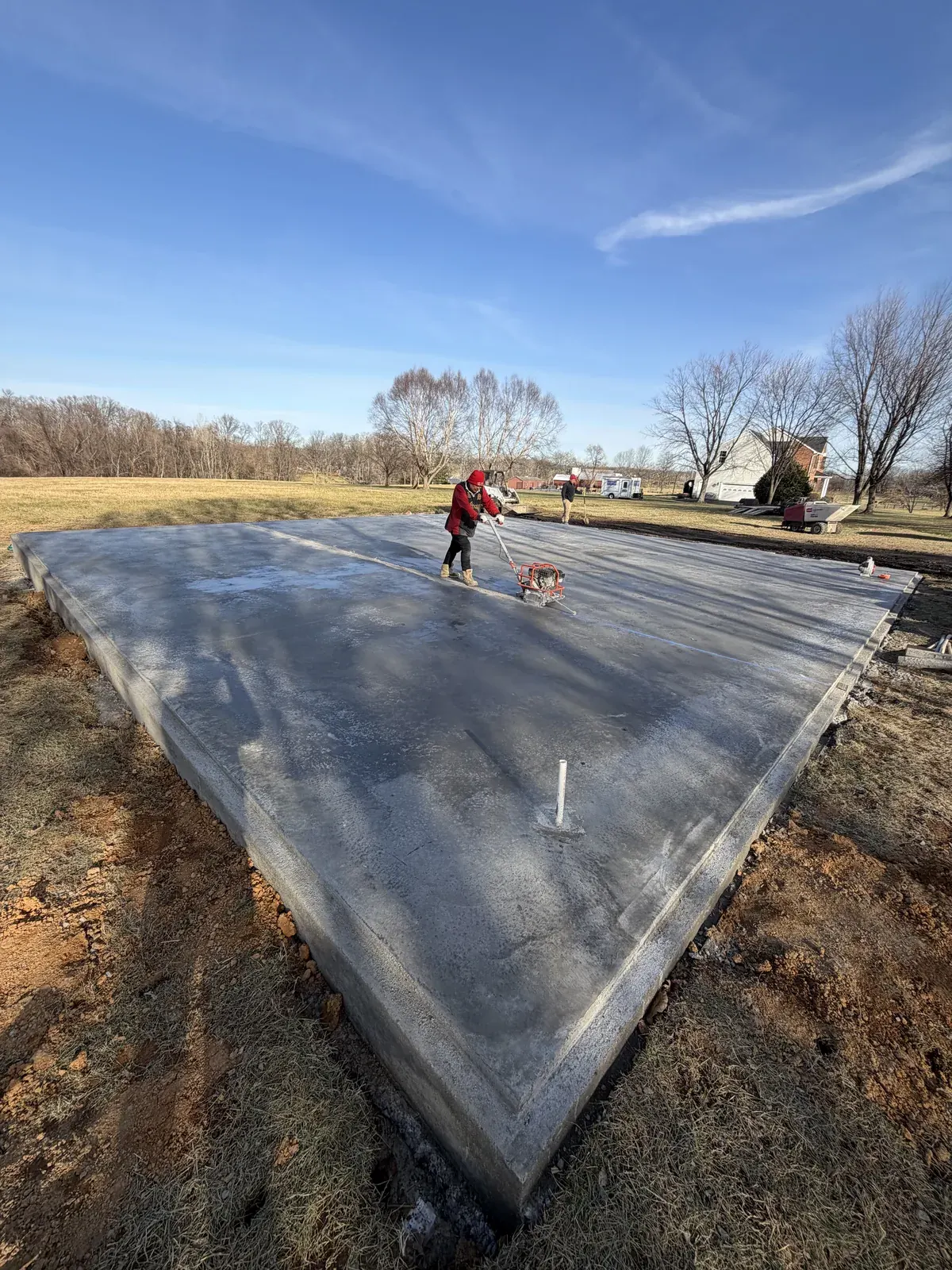
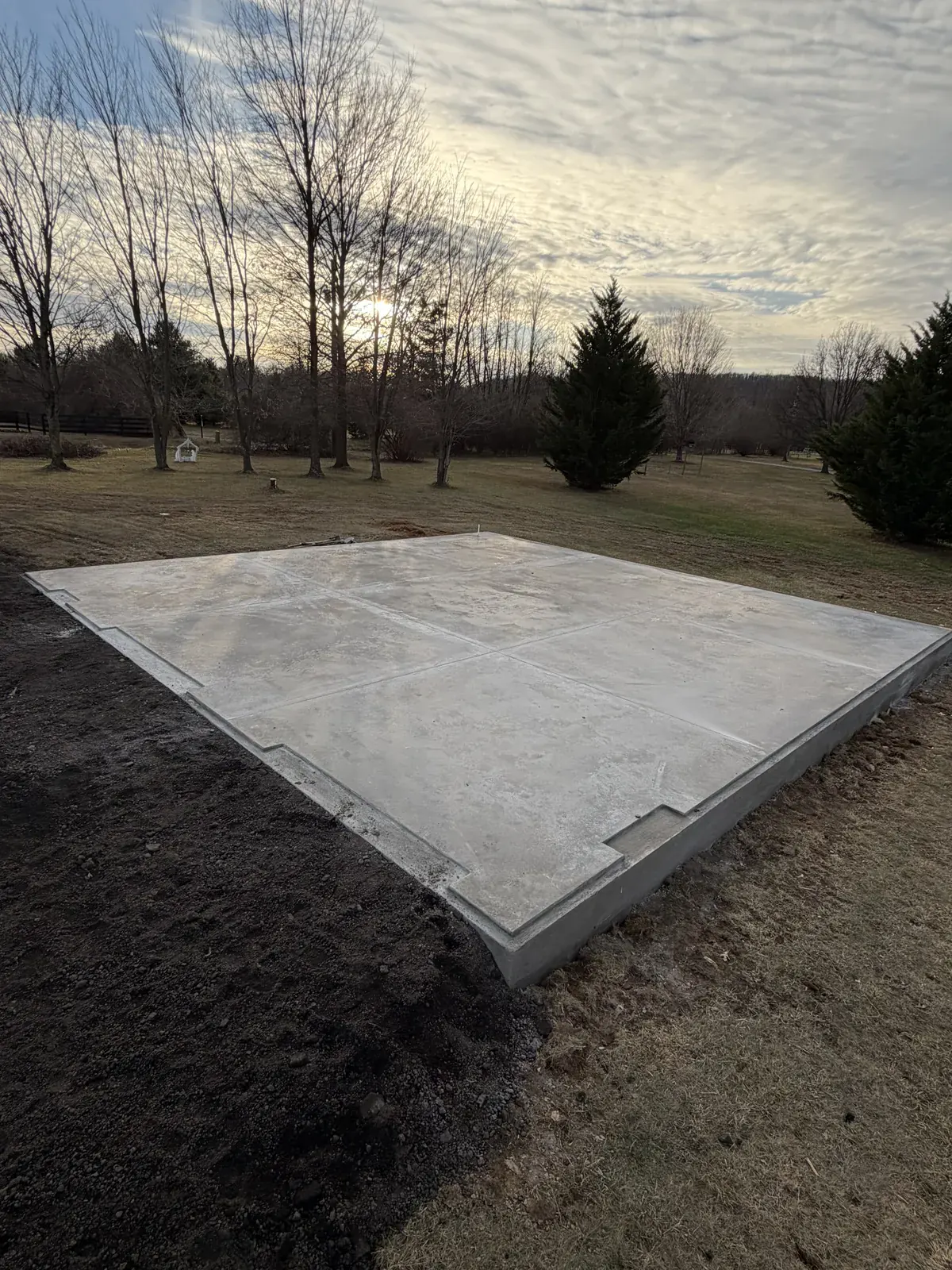
Concrete equipment pad in Northern Virginia
Concrete Pads · Northern Virginia

Concrete Pad
Contractor in
Northern Virginia.— sized to your equipment.

HVAC, generator, shed, hot tub pads · Loudoun, Fairfax & beyond

Equipment pads are small projects with big consequences. A misaligned generator pad voids the warranty. An undersized HVAC pad cracks under vibration. A hot tub pad needs to be perfectly level. We pour concrete pads across Northern Virginia, sized and reinforced to the specific equipment they’ll hold.

— or pay over time with financing
10+
Years Experience
500+
Projects Completed
4.8
Google Rated
100%
Fully Insured
Concrete equipment pad
— What we pour

Pads sized to what they hold.— not standard catalog sizes.

An equipment pad isn’t a generic slab. HVAC units have minimum spec’d footprints from the manufacturer. Generators need clearance and venting. Hot tubs need perfect level and water-load reinforcement. Sheds need adequate footing under the bearing walls. Every pad we pour is sized to what’s going on it.

We pour concrete pads for residential and small commercial equipment across Northern Virginia. Most are simple square or rectangular pours, but the prep, the reinforcement, and the leveling are the difference between a pad that lasts and one that fails when the equipment hits the warranty term.

Pad types

Six common pads. — sized to the load.

Most common

HVAC Pads

Outdoor condenser pads, sized to the unit’s footprint plus required service clearance. Reinforced for vibration, leveled to spec.

Backup power

Generator Pads

Sized to the generator’s footprint with venting clearance. Reinforced for the unit weight and any conduit penetrations.

Outdoor storage

Shed Pads

Foundation pad for sheds, often with thickened edges where bearing walls land. Sized to the shed plus a 4-6″ perimeter for splash.

Outdoor living

Hot Tub Pads

Hot tub pads need perfect level (most tubs don’t tolerate more than 1/8″ per foot) and reinforcement for the water load. We spec to your specific tub.

Workshop

Equipment Pads

Workshop tools, mini-splits, pool equipment, propane tanks. Sized and reinforced to the specific equipment and the way it’s used.

Outdoor

Outdoor Kitchen Pads

Foundation for outdoor kitchen builds — grill, countertops, integrated storage. Sized to the design and coordinated with adjacent patio if needed.

Our process

From spec to pour. — weather permitting.

01

Spec review

We confirm the equipment dimensions, weight, anchor points, and any clearance requirements. Smaller pad, smaller margin for error.

02

Site prep

Excavate to depth, compact the base, install forms to the exact pad dimensions. Drainage slope set if the pad needs it.

03

Pour & finish

Reinforcement laid. Concrete poured, leveled precisely (critical for hot tubs and generators), and smooth-finished.

04

Cure & ready

Pad cures before equipment goes on. We walk you through the cure window so the equipment install doesn’t damage a fresh slab.

Why us for pads

Small pad, big consequences — if it’s done wrong.

01

Sized to your equipment

We confirm the equipment dimensions and clearance before pouring. Pads sized to spec, not to standard catalog dimensions.

02

Properly reinforced

Reinforcement sized for the load — vibration for HVAC, water load for hot tubs, point loads for generators. We don’t pour a slab and hope.

03

Perfectly level

Hot tubs and generators have strict level tolerances. We confirm level before, during, and after the pour.

04

Fully insured & warrantied

1-year limited workmanship warranty on every new pour*.

Common questions

Concrete pad questions. — what homeowners ask first.

01 How thick should my equipment pad be?

Thickness depends on the load. HVAC pads are typically 4″. Generator pads run 4-6″ depending on size. Hot tub pads are usually 6″+ because of water weight. Shed pads vary by shed size. We size to your equipment, not to a generic standard.

02 Do I need a permit for a concrete pad in Loudoun or Fairfax County?

Small pads (HVAC, generator, shed) usually don’t require permits if they’re not connected to the house structure. HOAs sometimes have additional requirements. We help navigate it.

03 Will my equipment pad crack?

There’s a saying in the concrete trade: there are two types of concrete — concrete that has cracked, and concrete that hasn’t cracked yet. All concrete cracks eventually. Our job is to control where: we compact the base properly, reinforce the slab, and place control joints by hand so cracks happen on planned lines instead of random splits. Our 1-year limited workmanship warranty covers structural cracks that meet the size/length thresholds — see full warranty terms.

04 Can I install the equipment myself after the pad is poured?

Yes, once the pad is fully cured. For most pads, light equipment can go on after 7 days; heavy equipment after 28 days when concrete reaches full strength. We tell you the exact timing for your pad.

05 How much does a concrete pad cost?

Pad cost depends on size, thickness, reinforcement, and access. A small HVAC pad runs in one range; a large hot tub pad with significant prep runs higher. We give a real number after a quick site walk or photos.

Schedule a Consultation

Got equipment that needs a pad? — tell us what it’s for.

Six quick fields. Knowing what’s going on the pad helps us estimate accurately the first time.

4.8 based on 50 Google reviews
Lead Submission Form

Or pick up the phone. — we’d love to scope it.

Most pad projects are quick estimates. Send a few photos with the equipment specs and we can usually estimate without a site visit.